Monday, January 27, 2014

Few


Love all, trust a few, do wrong to none. - William Shakespeare

 We get the itch every few years. It is uncontrollable, really. Like the Seven Year Itch except closer to four or five. We quit our jobs, take the boys out of school, pack up the house and leave. For a new life, a new adventure. Discover and rediscover.

 We have gotten in the habit of moving every few years. Maybe it isn’t good for the pocketbook but it is certainly good for the soul. Maybe it isn’t the wisest thing for the kids but it certainly is an adventure, a learning experience.

 But we have been here, in this city, for a few more years than we usually are. Quite a few. It feels unnatural, abnormal, a bit horrifying, as if our life plans have gone awry. Just as the boys grow up and independent, we can’t quite make the decision to leave this town, this time. Now. Maybe we’ll decide in a few months’ time.


 I’ve been known to raise a few eyebrows in my time.

 My son used to beg me not to dress this way, wear that coat, make a scene when I come to his school. I was, just for the very fact that I was l’américaine, different and noticeable. I stuck out like a sore thumb. And I didn’t have to make it worse by actually making the choice to call attention to myself.

 Ah, my son. Yes, I admit I raised a few eyebrows. I didn’t do it on purpose (which he simply refused to believe), but how could I not? Crazy American lady who dressed the way I did, acted the way I did among the very restrained French, spoke my mind in an environment in which one did not.

 I think the French may have, at one time or another, considered that I was a few bricks short of a load, or wondered if I wasn’t a few cards shy of a full deck.

 Win a few, lose a few.


A few good men.

 Just a few ingredients is all one needs for a great meal. Warm, tender potatoes, cool frisée salad, shredded cooked beef. Or mussels, shallot, parsley and white wine. Delicate choux puffs, scoops of vanilla ice cream, warm chocolate sauce. Lamb, a few carrots, mushrooms and tomato sauce. Pasta, lardons and cream.

 A few spices to kick up a dish, more and it would be criminal. Cumin, coriander and turmeric. Adobo, paprika and pepper. Cinnamon, nutmeg and ginger.

 A few extras tossed into the mixture to give a dish personality, flavor and culture. Prunes, almonds and honey. Shallots, onions and parsley. Chickpeas, garam masala and coriander. Garlic, celery and carrots. Raisins, hazelnuts and vanilla. Or chocolate chips, pecans and cinnamon. Ketchup, mustard, relish!


Every day we should hear at least one little song,
read one good poem,
see one exquisite picture, and, if possible,
speak a few sensible words.
- Johann Wolfgang von Goethe

 I have a persnickety one. Finicky doesn’t begin to describe him, my angel, my son. The repertoire of what he will eat is a short one at best, a few items only, the bare minimum to survive. Pizza, grilled fish or chicken breast, grilled cheese or tuna sandwiches, tacos. No sweet tooth, he deigns nibble on only the few baked goods I now make specifically for him, chocolate cake, chocolate chip cookies, profiteroles. He was barely a few years old when he clamped his rosebud lips together and began to refuse anything other than a few chosen items.

 He apparently can live on only a few foods. Every few days I, his mother, runs screaming from the kitchen in desperation.

A Man of Few Words

 A few minutes, a few days, a few weeks, how long does it take? To fall in love.

 Éperdument, follement perdue… madly head-over-heels in love.

 A few minutes, I spotted him in the garden behind the big old house and something niggled deep in my brain, something ages old and familiar yet foreign and obscure. A few days of watching, listening and I knew it had to be him. A few weeks and we spoke, if ever so distantly, dancing slowly, gently around each other, unsure, doubting. A few months, the longest few months of my life, and we came together, somehow, inexplicable.

 A few sparing words, a few dance steps, a few glances and I was his. And he was mine.

 A few short months and we were married. Toujours.


A few ingredients can make a great dish. My natural inclination is to go for dishes without ingredient lists that are too long (maybe that is why I love Italian cooking so much) and this Fried Banana and Bread Dessert with Maple Syrup is a great example of how you can cook with just three ingredients (not counting the butter) and have a wonderful dessert in very little time!

ILVA'S FRIED BANANA AND BREAD DESSERT WITH MAPLE SYRUP

a few bananas
a few slices of stale bread
a few spoonfuls of maple syrup
butter (I prefer salted)

   Cut away the crust of the bread and then cut it into cubes. Heat up some butter in a skillet and fry the bread cubes until golden. Take out of the skillet and let them drip off the excess butter on some kitchen towel paper.

   Slice the bananas and fry them gently in the remaining butter until golden.

   Plate the banana slices together with the bred and drizzle maple syrup over before serving.

  Share on Tumblr

Monday, January 20, 2014

Nuts


Nuts to you.

 My husband is convinced that he is allergic to walnuts. He has never cooked with nuts and as he does not bake, he had never considered how often nuts can be used in cakes, cookies, pies. Hazelnuts and pecans, macadamias and almonds, cashews and, yes, walnuts. Whole, chopped or ground. In the batter or for decoration. Walnuts, that most American of baking nut… loved by his nutty American baking wife.

 Walnuts have always found their innocent way into my confections. Fruited quick breads, chocolate chip cookies and brownies are always so much better with the crunch and bite, the earthy flavor of a good, coarsely chopped walnut. Roll chocolate truffles in chopped walnuts or press them into the frosting of a layer cake, round and round, and you’ve dressed it up for a party.

 And what better partner for chocolate, orange, vanilla, cranberry than a walnut? What better to add crunch to a salad than a walnut? What pairs so much more beautifully with gorgonzola, pears, comté, goat cheese and apples than walnuts? But no, husband has decided that he is allergic. To walnuts.

 He drives me nuts.

 And so I have given up on, abandoned walnuts. Replaced with pecans. Which somehow work.

 My husband is a hard nut to crack, indeed.


Peanuts.

 Dig through the slender box of Crackerjacks, licking the sticky caramel off of your fingers, or pour out a pile into the palm of your hand, popped corn sliding off, bouncing onto your lap, and pick out the peanuts, salty-sweet, slightly bitter, a rare treat. Snap the shell and toss on the ground, slide and rub the meat of the nut in between your fingers until loose and pop into your mouth; circus, bar, bbq joint, goodtime peanuts!

 Peanut butter was a thing of my American childhood, peanut butter sandwich after peanut butter sandwich. Soft white slices glued together with peanut butter, sometimes smooth, sometimes crunchy, but always peanut butter. Peanut butter sandwich in a brown bag lunch or peanut butter sandwich in one hand, book in another, sitting wedged in the forked branches of the tree in our front yard. Or on toast, when another mood struck, a smear of peanut butter on the hot, fresh-from-the-toaster slice, melting and warm as soon as it touched the surface. I never really liked peanut butter and jelly. But during my adventurous years, I loved nothing more than blending peanut butter with sweet and salty and smoky. Anything goes! Peanut butter and banana slices, peanut butter and salty potato chips, peanut butter and salami or bologna or all of the above in one. I felt so cosmopolitan.

 Give the dog a spoonful of peanut butter and watch her tongue stick to the roof of her mouth. A wildly good joke among us kids.


Nuts

 My mother teased my father incessantly. More often than not, it was good-hearted teasing, meant to pull this kind, gentle, quiet man out of his shell. Make him chuckle. Sometimes it was like pinching him, pressure just enough to nip without seriously hurting, just a tweak to rile him up, make him nuts, when he did something that just annoyed her. She would taunt him by calling him Morty instead of Mort, or by placing objects where he didn’t like them to be. There were times, according to her stories, when she had been reduced to throwing dishes on the floor, shattering them at his feet to get even the slightest reaction out of this man who did not like confrontation, who was the most peaceful human being we knew.

 But her favorite jibe was a chant which never ever failed to make him smile, make him chuckle in its pure silliness. And love.

 "Your father is a nut. Your father is a nut."

 Sung to the tune of The Farmer in the Dell.

 In my father’s last year when he was sinking further and further into dementia, that no man’s land of darkness and decay, my mother took care of him on her own. In order to keep him focused, in order to connect with him and make sure he knew who she was, she would chatter to him, sing to him, attempt to stir up memories, links to his past. I would often peep into their bedroom as she was waking him up in the morning or tucking him in at night and I would hear her chanting “Your father is a nut…your father is a nut!” and my father, his eyes locked on hers, would be grinning ear to ear.


Nuts and Bolts.

 Pine nuts. Pecans. Almonds.

 Pine nuts. Pesto. Biscotti. Pan dei Morti. Pinolata. Torta della Nonna. Pignoli.

 Pecans. Pecan Pie. Brownies. German Chocolate layer Cake. Praline. Turtles. Pecan Fish. Apple Pecan Dressing. Pecans.

 Almonds. Macarons. Tuiles. Financiers. Truite aux Amandes. Nougat. Frangipane. Amandes.

 I have long associated certain nuts with certain countries. Nuts a hearty staple of a cuisine, of the pastry, of a culinary heritage. Dining on my first Truite aux Amandes in that huge, bustling, gorgeous Art Nouveau brasserie in the center of Paris, a whole trout lying placidly on the plate, staring off into the distance, elegantly dressed in a cloak of slivered almonds. Coquette. A shower of finely ground almonds like damp sand on a beach, the color of wheat, folded into meringue. Paper-thin flakes of almonds, gently toasted around the edges, the crispiness, the nuttiness of a tuile, perched architecturally atop a crème or a boule de glace. So very French. Receive one’s slice of galette des rois, flakey crisp puff pastry artistically embellished and hope to be the one to find the tiny ceramic charm tucked inside the dense, moist frangipane, almond cream filling. Smoked almonds in a tiny little bowl, elegant apératif with a glass of white wine. Amandes.

 The crunch of pine nuts in a spicy pan dei morti, Dead Man's Bread, so light against the deep deep reddish brown of the cookies like the bones they represent, eaten on Festa dei Morti e dei Santi, All Saint's and All Soul's Day. Thick, creamy pesto, handfuls of fragrant basil, fresh from the garden, a generous dusting of Parmesan, pine nuts. The nutty frangipane nip of a Torta della Nonna or a sweet Pinolata. Homey. Lightly toasted pine nuts scattered atop a plate of pasta or salad, the nubbly landscape of a cookie. Pignoli.

 Pecans, smooth, hard, chocolate brown shell cracked and crunched open, picked apart to reveal a tender, gnarly meat. Not the prettiest, maybe, but certainly the tastiest. Their heady flavor perfectly matched for stronger flavors like caramel, chocolate, buttery, rummy, spicy coatings. Or standing on their own in delicate, vanilla-scented cookies, dusted with cinnamon sugar. The centerpiece, folksy, rustic, of the Thanksgiving meal; although dessert, who doesn’t wait for a wedge of pecan pie? All American. Pecans.


The perfect blend of sweet, savory, salty and earthy, this pear salad is wonderful in winter when a variety of pears are available and at their best. This elegant dish can be served as a starter or to finish a meal. 

Ilva and Jamie’s Winter Pear Salad
Serves 2

 Slice one pear lengthwise (top to bottom) and fry them gently in salted butter until golden and soft without being mushy or falling apart.

 Divide the buttery slices between two plates, top with several leaves of rocket, cubes of gorgonzola and roughly chopped walnuts. Serve immediately while the pears are still warm.

Monday, January 13, 2014

Orange


 Orange, the cool color of winter, the warm color of summer.

 Orange Creamsicles, orange sherbet, orange Kool-Aid, orange soda icy cold, a kid’s survival kit for the searing, scorching heat of the summer months. Apricots and peaches in pastel shades, tinged with pink of the morning sky, orange juices dripping down chins, onto the sidewalk, pits spit across the lawn.

 Knock knock who’s there? Orange? Orange you glad I didn’t say banana?

 Candy corns, pumpkin pie, roasted sweet potatoes, the orange that heralds the change of season, rings in an autumn of orange and gold. Halloween and Thanksgiving, hallmarks of fall, filled with orange fading to brown, deepened with yellow, the colors of fallen leaves.

 Citrus. Winter is welcomed with orange, darker, richer orange, nubbly skins and sweet insides, orange fragrance, spurts of juice. Navals and tangelos, tangerines and clementines, a slew of orange that brightens my winter days, a little bit of sunshine with each orange reminder of my youth.

 Candied orange peel dazzling in crystals of sugar or hiding wickedly beneath a dark cloak of chocolate. Christmas.


 Holidays were always punctuated with orange. My mother’s sweet potato casserole, sweetened with a splash of orange juice and a thick layer of mini marshmallows cooked until a gooey, sugary mess with a fine crust of blackened crunch was perfect with the bland turkey. Later, I would whip up a pumpkin pie, replacing dad’s canned filling and frozen crust with homemade, a splotch of whipped topping breaking up the monotonous orange landscape of the surface. Some years later, pumpkin would be alternated with sweet potato pie of a glossier orange speckled with faints flecks of a brighter orange against the duller tone.

 Pumpkin bread in a deep gamboge dotted with dark chocolate chips or cranberry walnut bread moistened with a glass of orange juice, perfect against the tart berries, the earthy nuts, an orange barely visible to the naked eye but for the blurred pinpoints of zest against white.

 Older, more sophisticated with a dash of daring, the orange now comes in astonishing scintilla, a heady whiff of Grand Marnier or Cointreau. No flaming, no amber, no golden color needed, this orange bursts forth on the tastebuds against a backdrop of chocolate of the deepest brown. Grand Marnier or Cointreau, orange hidden among the innocent white of a panna cotta or a delicate vanilla sponge, secretive in appearance, very adult, provocative, sexy when discovered.


 I awoke each African morning to a blaze of sunshine, a blast of heat and a tall, slim glass of freshly squeezed orange juice with which to swallow down two bitter quinine tablets.

 Thin, shiny, impossibly plastic version of cheese, an ode to cheddar, enveloped snuggly in plastic. Peel back the wrapper and pull up the orange square like a postage stamp and place in squarely in the center of a slice of white bread and then another and cover with a second slice of bread. Slather just the right amount of butter or margarine on that bread, flip and repeat. Slip onto a hot griddle, into a smoking skillet, fingers sticky, slippery with fat, and cook, flip, cook, flip until more than simply golden, close to burnt. Scoop out of the pan and onto a plate and slice on the angle creating two perfect, perfectly even triangles (never rectangles, never squares!), the bright orange goo stuck to spatula, stuck to plate, stuck to teeth.

 You added vegetables to my cake! His accusation stunned me. How did he know? This little boy, my angelic little son was a demon when it came to vegetables, could discover them, spy them, sense the merest presence in the wink of an eye, by simply standing in the same room as a cake, cookie or loaf. His accusation put me on the spot. How could I lie? He noticed the flecks of orange in the golden cake, claimed to be able to taste carrot in the sweet, cinnamon loaf. With his absolute abhorrence of vegetables, he acted as if I added finely grated carrot by design, to pull the wool over his eyes, to trick him into eating vegetables.


 We had a basketball. My dad screwed in the headboard and basket against the house above the garage (do not bang the basketball into the garage door, please). That basketball offered us kids hours, days, months and years of entertainment. Oh, the games we made up with simply one orange basketball and a basket, playing on that cement driveway, my brothers and I. Friendly competition in orange.

 The kitchen was a given: red, deep cherry red cabinets, gray countertops, white walls. Husband absolutely had to cook surrounded by red. The diningroom was a gift to me: heavenly raspberry walls edged in brick; edgy, indeed. The family room, one of two huge spaces lined on two walls with picture windows allowing for a flood of light all year round, was our common dream, white balanced with charcoal gray, half and half sensual, voluptuous, evocative charcoal, as moody as the photographs of the blackened faces of Chinese miners lining one wall. Charcoal and white with the merest touch of humor, a mod touch of Kelly green reminiscent of our youth.

 The argument came in the living room. The source of the disagreement, the bone of contention, was orange. An expanse of wall all in orange. Yes! He said. Noooo! She parried. There is nothing worse than orange (accept maybe green). Back and forth, the argument heated orange. Orange will suffuse the space with warmth, infuse it with energy, he affirmed. Orange, oh no, not orange! She begged.

 Of course, he won out. He dragged her to the paint store where samples of orange fanned out in front of them. He urged, she moaned, they argued. Until a color orange was decided upon. Burnt Orange. And that wall, concealed under an opaque coating of burnt orange radiated an energy, strength, something hot and positive, something that would lean towards bawdy, lusty, sizzling.

 And together they basked in that burnt orange. And orange invigorating, stimulating. Orange.


 Your food is all brown, she scoffed with distaste. Brown. From one end of the table to the other, from appetizer to dessert, brown. I am the granddaughter of immigrants, hearty Russian stock coming from a cold land where bodies were sustained with potatoes, cabbage, beets, onions and chicken. The dinner table was filled with hot cabbage soup, kasha varnitchkes and carrot tzimmis, potato kugel and carrot kugel, the Holidays found us sitting in front of plates laden with smoked fish and chopped chicken livers, chicken soup with matzoh balls and golden, sweet loaves of Challah. Making an exception for a ruby red bowl of borscht or the bright orange lox tinged with pink, our food, I have to admit that our food is decidedly brown.

 She was the daughter of Moroccan immigrants. Her own parents came from a land not of cold and grey, but one of sunshine and fertile land. Her culinary heritage is filled to overflowing with violet eggplants, golden orange pumpkin and carrots, deep green zucchini and bright yellow lemons. Dishes are spiced with saffron and cinnamon, drizzled with honey and flavored with dried fruits and nuts. Though I defended my culinary inheritance with the pride of a scrappy but out-weighed boxer, I could definitely see her point.

 Bright orange chunks of fork-tender carrots and wedges of pumpkin nestled against the zucchini and chickpeas in a fragrant broth; dazzling carrots neon orange glazed with a slick of oil, a gloss of honey, stained with a hint of saffron. Our dull brown carrot kugel is no comparison to the gleaming brilliance of a North African carrot salad dappled with deep green mint and coriander. Our beets may be rosy, but an orange salad, sweet, juicy, gorgeous and glistening, shiny with sunny slices of orange with the added brightness of slippery olives or pomegranate seeds like jewels against the dessert sand.


This orange and olive salad is a true Sicilian classic, there are other versions of it with fennel or onions but I choose to give you the original! I also present it in a different way than I would actually make it normally but for the sake of visual interest, I didn't peel the orange before slicing it. I suggest you do that. 

SICILIAN ORANGE SALAD
4 servings

3 oranges
a large handful of olives
pepper
salt extra-virgin olive oil 

   Slice the oranges and distribute them on a plate. Top with olives, salt and pepper lightly and then drizzle some extra-virgin olive oil over it all. Leave to marinate for a while before serving.


Monday, December 23, 2013

Holiday


 Will it snow this year? I find it extremely difficult to find that old holiday spirit while the rain beats against the windowpanes, as the hail clatters onto the balconies and the clouds hang low and menacing, the sky a steely gray. The lights glitter, diamonds in the shimmering black puddles, in the inky night, the branches crack and sway, the leaves spatter onto the sidewalk below as the wild wind whips the streaming rain cascading down in torrents across the square. Doors creak, we snuggle down deeper under the blankets; we love the coziness, the storms outside are romantic when one is safe inside, yet the approaching festivities call not for rain but snow! We awake to the gray, dismal morning, no sun appears at noon, and we search, alas, in vain, for that old holiday spirit.

 Snow somehow adds the jolly to Christmas, the happy to New Year. Slipping on the boots, buttoning up our warmest, snuggliest coats, burying our chins deep into mountains of scarf and, gloved hand in gloved hand, out we prance through the crunching white, the sun bright and cheerful and tip toe our way into town. Everything looks so sparkling clean, so lovely and festive to a backdrop of snow! The holiday songs carried to us on the wind and piped into every boutique somehow just sound merrier, the window displays more vibrant and playful, our fellow shoppers gleeful, convivial. Laden down with sacks and bags, boxes beribboned, we hurry home, noses red, cheeks rosy, giggling like children on Christmas morning, to curl up together in the corner of the sofa, hands cupped around steaming mugs to watch the snowflakes flurry in a Winter Wonderland on the other side of the icy, misty glass.


 One last day of shopping before Christmas and the gifts are all bought, piled up in secret places around the house. My baking has taken a festive turn and Stollen and cookies of all sorts have been tumbling out of the oven and lining themselves up prettily on the kitchen table. The magic of a real bûche de noël awaits, slathered in chocolate, dusted with snow. We’ve stocked the pantry with all kinds of simple, warming foods, enough to see us through the wintry week. My favorite Christmas films are stacked up on the coffee table, the old and the new, the real and the animated, each begging to be watched first, promising to fill our house with holiday music, laughter and good cheer!

 Tomorrow morning, Christmas Eve morning, we will wend our way to the market, bundled up in heavy coats, arms wrapped close around ourselves to ward off the blustery wind and the tat tat tat of wet flakes stinging our cheeks. We’ll push our way through the Christmas Eve crowds and fill our basket with oysters and a slice or two of foie gras, and maybe, just maybe, he will make a wonderful seafood choucroute for two. Or a cheese fondue for the boys. I’m rather a sentimental old soul, and as I step out into the flurries and chill, memories of Christmases past whirl up like a snowstorm in my mind and visions of icy white nights in Milan pulling smoky chestnuts out of paper cones, warming our hands, and popping them one by one into our mouths; excited little boys dashing up to greet le Père Noël who magically appears laden with gifts at their grandparents’ house; arriving late Christmas Eve to a balmy Florida town and being driven around up and down every street just to ogle the gaudy, outrageous Christmas decorations and the romantic luminaries all aglow, hands clapping and faces brimming over with delight, all intermingling in one glorious dance!


 The Christmas holidays have arrived in a blustery, wet haze, stomping in like an uninvited guest leaving filthy black shoeprints all over the new white carpet without even a bouquet of flowers to ease her unexpected intrusion. The chill winds of the holiday season whipped in unannounced when my back was turned, when I had least expected it.

 Christmas. The wind whistles and howls outside as the wet snow whips around through the trees, lighting up the square below and adding a festive luster to the treetops, while inside we sit cozy and warm. Like wide-eyed children on Christmas morning, we stare through the panes into the velvet night as the heavy plops of white thud against the glass and settle onto the inky black iron curlicues of the balcony railing for the night. The lamplight shimmers in the glistening snow blanketing the roofs of the cars and we snuggle up a little closer and whisper our prayers that it will last through the holidays.


 One blustery day leads into the next and as the rest of France is blanketed under an elegant stole of white, as images of Parisians standing amid flurries of flakes scroll across our television screens, we listen to the rain pound on the roof, watch it slide sadly down the glass panes, and the urge to warm up the kitchen with baking washes over me. The only feathery white powder I have the chance to feel against my skin is flour. Soft, fragrant flour blended with cocoa and sugar, eggs and cream, fill the house with the sweet scent of celebration. Thoughts of cinnamon and chocolate, nutmeg and orange fill my head as I skip into the kitchen and start pulling bowls and pans from the cupboard, as I sift through the drawers in search of teaspoons and tablespoons, measuring cups and zester. And as traffic in the City of Lights comes to a standstill in the frosty night, as grumbling tourists try and make light of closed roads and closed airports, as a warm glow emanates from a bustling workshop somewhere north of Lapland, I blend and stir, whip and fold. I toss in a little Christmas spirit in the form of mixed holiday spices: cinnamon and nutmeg, star anise, ginger and cloves, a dash of lemon and orange zest, a splash or two of rum, heady and wild, and it smells as if I am living in a white-icing edged, candy cane and gumdrop-trimmed gingerbread house.

 So while others dream of a White Christmas, while visions of snow-dusted sugarplums dance in their heads, we sit inside in the warmth, snuggled up together, listening to the rain and watching the darkness come much too early every afternoon. We cook, bake, eat and watch old films and are overcome with that wonderful holiday spirit that wraps its arms around us no matter the weather and no matter what is happening outside in the world, outside of our own existence. So slice another piece of cake, pour another glass of wine and turn up the volume of the stereo or the television just a little bit more and maybe this year we will even exchange gifts.


Plated Stories will be taking a holiday break and will see you in the New Year. 

We wish you one and all a joyous, merry holiday filled with peace and good cheer.


Monday, December 16, 2013

Light


Blazing

 The Florida sun is like no other. Morning breaks at the height of summer in a dazzling blaze of light, a haze of heat pulsing through the early morning hours already steamy. Blinding white light bouncing off of the sidewalk, searing light burning into one’s soul. Eyes squinting, sweat trickling down one’s back, peering through the light into the distance, an eerie oasis in the distance, stillness moving in the light. 

 Too much light.

 One searches for respite from the brightness but to no avail. Light much too strong, heady, powerful, allowing no shade under the trees. Feet burn on sidewalks, in the grass, the tough Florida grass, as unforgiving as the light, that bites into one’s feet.

fog

Ghostly

 The watery winter light filters through the grayness, breaking through here and there in faded yellow bursts. A winter light that has no resemblance to the flashy light of my childhood winters. A light moody, blurred and dull, lacking definition and lacking inspiration. A light ineffably sad.

 Like the light outside, our own inclination fades and falters, lacking its own definition in the lazy light of winter. This weather, this nebulous light inspires nothing more than staying in, slouching on the sofa and letting one’s mind wander to ghosts of our past.

 A veiled light, at once weary and romantic.

 Night falls, the light is swallowed up into blackness so complete the memory of the day falls away into the unlit recesses of the mind, forever gone. The lights of the city dot the landscape, glitter joyously, shimmering in the glass panes of the window which are now misty against the cold.

 The Hanukkah candles are lit one by one against the backdrop of night. One by one a single flame catches and blazes up in a wonder of light. A warm glow fills the room as we gather around the menorah and chant on this Festival of Lights.


Flashy

 The holiday spirit has invaded Nantes if ever so discreetly, understated elegance, so very French. The great swags of glittering lights in red and silver are already hung from lamppost to lamppost, shop windows have already begun adding to the display with shows of elves and polar bears, lush wreathes and bright garlands, trees green and beribboned or merely the suggestion of trees in delicate white lights. I love the holidays yet how I miss the vibrant, exciting, overdone American version of Christmas. Homes weighed down under millions of gaudy, whimsical, colorful holiday lights; Santa in his sleigh, drawn by a team of reindeer prance across front lawns or perch precariously on rooftops, in a halo of neon, a brilliant circle of spotlight. Over the top, ostentatious beauty infuses every observer, whether celebrant or not, with an energy and enthusiasm strictly reserved for December.
 

 Radiance

 Arriving late one Christmas Eve to a balmy Florida town, we drove my young boys around the city, up and down every street just to ogle the outrageous Christmas decorations and the romantic luminaries all aglow, all intermingling in one glorious dance, a sight neither had ever seen or experienced before. Hands clapping and faces brimming over with delight, faces bathed in the warm lights, my boys light up, astonished in front of the festivities, in front of such a celebration, to the music of Christmas.


Lite

 Too much indulgence. Too many rich, heavy meals topped with cheese and laden with sauces. Too many slices of cake, bowls of ice cream, chunks of bread slathered with butter. Comforted and warmed by spoonfuls of rice pudding, sweetened oatmeal and too much cream. A winter spent bundled up in sweaters and coats, socks and padding and hidden under shawls and scarves. As we slip off the layers one by one, as the temperature inches up and the days grow warmer, we see the damage done.

 Eat lighter, they exhort! Lighter than light, we fill our basket with lettuce and tomatoes, fruits and vegetables. We sidle up to the cheese counter and stoutly ignore the bleu and comté and request that la fromagère scoop up ladlefuls of low fat cream cheese into a tub.

 There is always a profound sense of deprivation when one eats light. Or is there? Fromage frais topped with seasonal fresh fruit, chunks of grilled meat swept through spicy mustard, the crunch of pickles and the sweetness of berries roasted in just a tad of sugar and a swirl of rum.

 The lightness of mousse, the delicate ethereal lightness of homebaked ladyfingers, the comfort of a bowl of Rice Krispies and lowfat milk, light indeed.


Flame

 We met in Paris, the City of Lights. Neon days and nights aglow in the flickering Eiffel Tower and the blazing Champs Elysées. By day, we would walk the quays along the Seine, the sunlight flashing off the water, turning our heads away from the glare. We would duck into a wine bar, lights dim. Glasses of red and plates of warm lentil salad were the only witness to our tryst. Light of his eye.

 We married on a July morning, a day bathed in light. I carried myself lightly, skipping to city hall on winged feet, lighter than air. The light filtered in through the windows suffusing the hall with a golden glow. Light of my life.

 We toasted our marriage with flutes of Champagne, giddy with bubbles and love. Lightheaded.


Whether winter or summer, there really is nothing better than an ultra-light dessert. Cool, tangy, ethereal Lemon Ricotta Mousse paired with melt-in-your-mouth light ladyfinger cookies is the perfect treat when a sweet tooth must be sated or as a light finish to any meal. I adore lemony desserts and the ricotta gives this mousse body and the taste of a light cheesecake without the heaviness. Beautiful topped with fresh berries. These ladyfingers are a favorite recipe, using them to prepare Tiramisu, a charlotte or with any kind of whipped filling, lining the pan or dessert glasses with them instead of a pie crust. My husband loves them dipped in milk as a snack.

JAMIE’S LEMON RICOTTA MOUSSE
Serves 4 – 6

1 cup (250 g) ricotta cheese, drained if wet
Zest of 1 lemon
Juice of ½ lemon and more to taste
1 Tbs limoncello, optional
3 Tbs powdered/icing sugar and more to taste
¼ - 1/3 cup (100 ml) cold heavy whipped cream
1 egg white

Beat or whisk the ricotta with the lemon zest, lemon juice, limoncello and 2 tablespoons powdered sugar until smooth and creamy. Beat the cold heavy whipping cream until thick and soft peaks hold. Gently and delicately fold into the ricotta mixture.

Using clean beaters in a clean bowl (I prefer a plastic bowl for beating whites), beat the egg whites until opaque; add one more tablespoon of the powdered/icing sugar and beat until peaks hold. Gently and delicately fold into the ricotta-cream mixture until well blended. Do not overfold as the mousse should be light and creamy. Taste and add more sugar and/or more lemon juice as desired, to taste.

Divide into glasses, verrines, cups or even wine glasses or Champagne flutes and chill until ready to serve, at least an hour.

JAMIE’S LADYFINGERS

3 large eggs, separated
6 Tbs (75 g) sugar
¾ cup (95 g) cake flour, sifted
Pinch of salt
1 tsp vanilla
6 Tbs (50 g) confectioner’s/powdered sugar

Separate the eggs. Place the yolks in a large mixing bowl. Place the whites in a medium-sized metal or plastic bowl and add a pinch of salt. Set aside.

Preheat the oven to 350°F (175°C). Line 2 large baking or cookie sheets with parchment paper ; “glue” down the corners of the parchment with a dab of softened butter or batter to assure that the parchment lies flat and won’t move when piping the ladyfingers.

Beat the egg whites on low for 30 seconds then increase the beater speed to high and beat until the whites hold soft peaks. Continue beating while sprinkling on about a tablespoon or 2 of the sugar and continue beating until the whites are stiff.

Beat the egg yolks with the remaining sugar and the vanilla until thick, pale and the batter forms a ribbon when the beaters are lifted up. Using a spatula, fold the whites into the yolk mixture in 3 parts, alternating with the flour, also added in 3 times, until smooth and well blended. Do not overfold.

Fit a pastry bag with a large plain tip (or just snip the end off; you could also use a plastic freezer bag) and fill with the batter. Pipe the batter into 5" long and 3/4" wide tubes (or larger or smaller as needed) leaving about 1" space in between the piped fingers. Sift half the confectioner's sugar over the ladyfingers and allow to sit for 5 minutes. The sugar will pearl or look wet and glisten.

After the 5 minutes, sift the remaining sugar evenly over the ladyfingers. This helps to give the ladyfingers their characteristic crisp top. Bake the ladyfingers for 10 minutes then turn the baking sheets around back to front and continue baking until the fingers are lightly golden, about 5 minutes more depending on your oven. Remove the baking sheets from the oven and allow to cool slightly before removing them with a metal spatula onto racks to cool completely.

 Share on Tumblr

Monday, December 9, 2013

Frozen


FROZEN TREATS

 Saturdays were spent at the public swimming pool, whiling away the sweltering, muggy, lazy Florida summers. A gaggle of ten-year-old girls, we would ride our bikes to the trio of pools behind the high school (used during the school year for the swim team, on weekends and all summer long for those who desperately needed respite from the torrid heat), lean the bikes against the chain link fences that circled the pools like a Wild West corral, mosey in and spread our towels out as elegantly as ten-year-old girls could on the hard, scorching cement.

 I carried with me a little black leather coin purse embossed with Mexican designs, a gift my mother had brought for me from one of her many vacation cruises, in which I carried a tiny photo of my latest crush, a photo carefully snipped from the sheet of class portraits (the same frozen stare in kodachrome that I received from his living glance), along with several coins with which to buy something icy cold from the concession stand. When the heat became too much, the sun at its peak in the cloudy blue sky, when the sweat trickled down our necks, backs and legs in rivulets even as we swept out of the cool water, sweat mingling with pool water, we would hop over (foot to foot, hopping to keep feet from burning the cement) to choose our ice cream.

 But I never chose ice cream. Ice cream was for winter. In the heat of the summer, one needed ice. Sorbets, slushies, slurpees, sno cones, popsicles, Italian ices, frozen treats to put out the flames with ice. I would invariably ask for a Snowball. Sweet cold cherry ice in a cone-shaped plastic container, the frozen perfection would be pushed up and out for the eating with a squeeze of the plastic cone. Front teeth scraping across the frozen surface, scritch scritch scritch, I would be shivering well before I reached the last of the cherry-flavored ice now a puddle of sugary, sticky syrup to be slurped from the bottom of the cup, head tipped back, eyes closed against the sharp sunlight. And nestled in the bottom of that plastic cone was the added prize: a candy-coated gumball.

 It is quite possible that the single and only reason I ever went to the public pool – seeing as I do not particularly care for swimming – was to eat a Screwball.


FROZEN TUNDRA

 The ground was as frozen as I was as I tiptoed ever so carefully down the steps and across the campus, treading ever so slowly from paving stone to paving stone in my wedge-heeled summer sandals. I had transferred schools midterm, defying the wishes of my parents and all common sense, heading north for the first time in my twenty-some years after a lifetime in Florida. I arrived in snowbound Philadelphia early January, stepped from the airport terminal into a chill I had never known, a frigid northern winter. 

 I began classes in the bleak midwinter, a Siberian landscape stretched away from me as I wended my way to each building. I had very little with which to insulate myself from the arctic temperatures, the numbing wind, the raw winter weather. Splotches of snow covered the streets, sidewalks and green here and there, my open-toed sandals, so perfect for a Florida school year, were no protection, even as I layered on socks and leg warmers. I piled on thick woolen sweaters, Salvation Army purchases, hand-me-downs from my brother, over my light cotton dresses. I felt for all the world like a duck out of water, an eccentric misfit in the middle of this strange new land, this frozen tundra of a big city.

 I spent my first school holiday with my brother in Boston. The dead of winter. Philly is nothing to Boston, the glacial temperatures, the mountains of frozen white, the wind that would whip around you, push and pull you back and forth, irreverent, frozen wind. Yet, even indoors, where one expects some kind of respite from the wintry chill outside, where one expects a cozy, comforting, hibernal warmth, my brother kept his heating off. We would huddle around the oven, spending our days in the kitchen, cooking and eating and laughing and chatting. But come night, we would shuffle off to our bedrooms and crawl under the mountain of blankets and quilts. And freeze. My hat, that wooly bonnet my mother knit for me, pulled down on my head, over my ears, gloves on my hands, fully clothed, yes, but wearing my winter coat as well, I would slide under the covers and, shivering in the frozen night, try to sleep.


FROZEN HEART 

 The Snow Queen. I was enchanted. I spent hours staring into the shimmering hologram of a cover, the magic of the three-dimensional image of the brother and sister in their darling little livingroom, a chalet of warm wood and light white linens. My fingers caressed the photo, and I could stare into its depth for hours, fascinated. 

 A wonderland of a book, it’s heavy cardboard pages opened to reveal images played out in cloth dolls, recounting Hans Christian Anderson’s tale of the Snow Queen and her frozen heart. 

 I was fascinated by the icy whiteness, the Queen’s sleek sleigh of white and the Queen’s prancing snow white horse dashing through a landscape of pristine white. Images frozen in time, frozen in space, yet so alive for the young girl that I was, driven by my wild imagination, longing for the strange and mysterious. I would have gone with the Snow Queen, hand in hand, accompanied her in her sleigh through the snowy fields like the little blond boy in the pages of the storybook. Her frozen heart was nothing to the romanticism of the frozen scenery, her frozen beauty. 

 Turn the page and the little boy is kneeling on the frozen lake, a chunk of shiny ice clutched in his hands, his sister begging him to drop it, leave it be before a frozen shard can stab his warm heart, turning it to ice. 

 A sweep of glowing Northern Lights like embers of a dying fire could not melt her frozen heart, warm the chill that numbed her heart. Nothing could save her.


FROZEN OVER

 The valet stepped briskly over to the window, footsteps muffled by the thick carpeting, and drew back the heavy, elegant drapery with one graceful movement of his uniformed arm. "I apologize for the view," he carefully explains, "If you were to visit us again in the springtime the gardens would be green and the flowers abloom in a gorgeous riot of color. It is rather sad and gray at this time of year!" We step over to the French windows and peep over his shoulder and I gasp. I am gazing at a frozen alabaster landscape painted in shades of pearl and pewter and white, achromatic and silent yet somehow alive, stunning, breathing with the slight, subtle movements of light and shade. Standing here in this grandiose Parisian Palace Hotel in the dead of winter, the day after one of the coldest Christmases I can remember, I look down and behold a fairytale vision, a winter wonderland: the frozen Tuilleries Gardens are white, icy white, a heavy veil of mist covers everything as far as the eye can see and it is magnificently, mysteriously romantic. Bare trees and stone sculptures reach up like phantoms shrouded in mist and all is motionless, it is as if the world has come to a standstill leaving only the two of us to listen to the silence, and all the rest is still and forgotten.

 Later, bundled up against the frigid, intensely raw wind, arm in arm we leave the warmth and glow of the hotel and scurry down the barren streets of the city to find our favorite little hidey-hole of a restaurant. We step over the threshold into a blast of tropical heat where a noisy, joyous conviviality reigns as clients pack elbow to elbow at the little wooden tables, chattering loudly and slurping up great bowls of soup. We shrug off our coats and slide into chairs, leaving winter alone outside to blow her frozen breath on the windowpanes in puffs of foggy kisses.


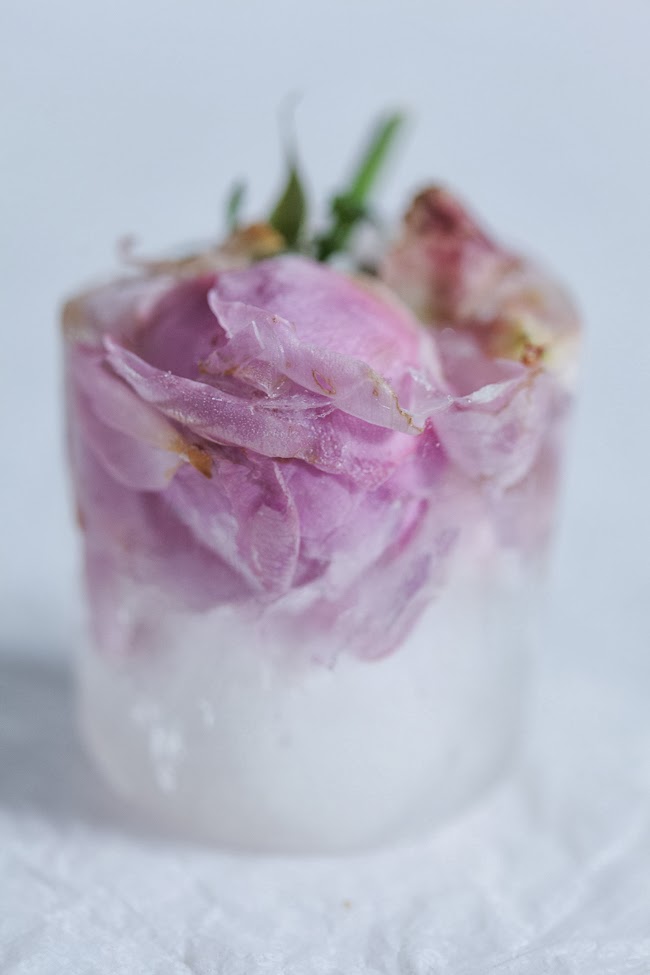
Slice and cut fresh watermelon into cubes, put them into a plastic bag and freeze it, if you freeze some extra watermelon, you can drink it all year round - it can't get fresher than this! 

ILVA'S FROZEN WATERMELON DAIQUIRIES
2 big or 4 small

350 g/ 12,5 oz frozen water melon in cubes
100 ml/ 0,4 cup rum (or more, it depends on how strong you want it to be)
1-2 tbs icing sugar or more. Optional
juice from 1 lime
mint leaves to garnish with

Put all ingredients except the mint (or why not include it?) in a mixer and run until it is nice and slushy. Pour into glasses, top with a mint leaf or two before serving.
 Share on Tumblr

Monday, December 2, 2013

Chocolate


Fetish (fet -ish) n. 1. an object worshipped by primitive peoples who believe it to have magical powers or to be inhabited by a spirit. 2. anything to which foolishly excessive respect or devotion is given. 3. an object arousing erotic feeling. - Oxford American Dictionary Heald Colleges Edition

 Chocolate. Certainly an object worshipped by many, not all of whom are primitive, yet some of whom would absolutely extol its magical powers. I have friends and known others, fools or not, who flaunt an excessive devotion to this “food of the gods”, willing to forgo most other pleasures for this sacred delicacy. And as a true fetish, many have laid claim to its reputation as an aphrodisiac, seducing a lover with a drizzle of warm chocolate sauce or a box tied up in gold ribbon.

 Chocolate, that most mysterious of foods, both soothing and sinful, comforting and decadent all at once. Passionate and inspiring, it stirs up more emotion than any other food; it is the downfall of many. No wonder it has also often been called the “food of the devil”.

 Chocolate, whether bold and bitter or smooth and sweet, crunchy, crispy, hot, warm or cool, light or dark, has been the source and inspiration for books, films, forums, salons, clubs. And a multitude of medical studies. Some like to claim that they eat it for this healthful property or that, that it brings on a sense of wellbeing or even euphoria. But all that takes away from its underlying power, its seductiveness. Deep down, chocolate pulls us into a dark, almost spiritual realm, a source of intense craving that no substitute can appease.

 But whether chocolate is consumed for its psychoactive or cognitive-enhancing properties, its magnesium boost, as some kind of holistic medicine, as a tool of sexual conquest, or as a substitute for lunch dates with friends or lonely evenings in front of the television, savored with a glass of wine, neck-deep in bubbles, no one can deny the passion that it stirs up in each of us.


 Standing in the Home Ec room watching my very elegant 8th-grade French teacher Miss Moore roll up chunks of deep, dark chocolate in pale, moist, out-of-the-can biscuit dough, must have been my first experience with something I considered so sophisticated, so very French. I pushed myself up on tippy toes trying to capture each and every movement of her hands as she created this special treat for a roomful of impatient students anxious to savor their very first taste of France. Our only experience of that foreign, most romantic of countries was between the pages of our French book where a very properly dressed Sylvie went to the piscine with her brother and watched la télévision while maman prepared dinner. Photographs of lovers strolling along the Seine, tumbles of flowers spilled out of market stalls and the French Président going to work on a bicycle inspired me, instilled an urge, a wanderlust… it was all so beautiful, so chic, so far away from this beachside town, hot and unsophisticated. This treat, so French, transported me if only in my young mind, if only for the time of a class.

 Yet years later there I was, on the streets of Paris tenderly clutching a flaky, crisp pain au chocolat, rather stunned that I was actually, finally there. My very first day, I stumbled into the nearest corner boulangerie – as was the thing to do on one’s very first day in Paris, bien sûr -and pointed, grinning, at the plump, golden pastry, just a teasing hint of the chocolate peeping out from between the folds.


  Bread & Chocolate stirs up visions of tow-headed children on Parisian streets, elegant little children in shiny Mary Janes or black brogues dressed in pleated navy skirts and Loden coats, their excited after-school chatter filling the void between honking cars and city sounds, each enfant cheri clutching a hunk of baguette, dense, warm from the boulangerie, a long, narrow bar of chocolate sticking out for all the world to see. Watch them as they bite into the crispy crust, crumbs hurriedly brushed away, joyously ripping into the tender center, crack into the slender bar of chocolate Maman or nourrice has so lovingly tucked inside and all thoughts of sharing a crêpe and a glass of wine with a chic young parisien fall aside: this is picture-perfect French romance itself.


Childhood Delight, Adult Necessity

 I have one son that likes nothing at all. Oh, of course that is an exaggeration but when one’s parents and only sibling love almost everything, are open to new taste sensations, new cuisines, all foods with little exception, and one limits one’s likes to a mere handful of choices, it goes without saying.

 He has no sweet tooth. He could truly do without sweets, no cake, no cookies, no candy, no ice cream. He is quite content with a fistful of breadsticks, a bowl full of olives, a slice of bread smeared with hummous. A tuna fish sandwich, extra mayonnaise, please. Which is even odder what with all the desserts, tarts and sugary things the rest of us consume.

 Yet once in a blue moon, he will request a sweet treat, either for a special occasion, his birthday, or to carry to friends. And every now and then (when cows do fly) he actually has a craving. And it is without fail, unequivocally, unshakably chocolate. And more exacting, more demanding one child cannot be. A simple chocolate layer cake – just chocolate, no coffee, chestnut, rum or Cointreau blended in – with a very simple chocolate buttercream. The normal chocolate cake, if you see what I mean. A pan of brownies with, yes, chopped pecans but heaven help us nothing else, nothing foreign, nothing weird. A good, deep chocolate flavor, the texture neither too gooey nor too cakey. Just brownies. Or something chocolate chip… chocolate chip cookies will be gobbled up quick as greased lightening. Or chocolate chip banana bread, the tiny chocolate chips in perfect balance with, just the right proportion to the banana.

 And that’s it. Chocolate.


I drank this type of chocolate one damp and cold November afternoon in the north of Italy, until then I had only had the more licquid kind that you drink in Sweden (very good too, especially so when served with whipped cream on top) and my encounter with dense chocolate to drink resulted in instant love! Here in Italy you can buy it in powder and all you have to do is to mix it with milk and warm it up but I prefer the homemade version, mostly because I can make bigger portions!


ILVA´S DENSE HOT CHOCOLATE
2 rather big cups

4 tblsp high quality cocoa powder
3-4 tblsp sugar
4 tblsp corn starch
400 ml/1,7 cup milk
spices or some other desired flavour

   Mix cocoa, sugar and corn starch very well. Pour milk into a pan and then add the dry ingredients while you whisk. Bring to the boil under constant stirring until it has reached the desired density.

   Drink and enjoy!

  Share on Tumblr